Oct 14, 2026
Stock Photos for Restaurants: Where They Help (and Where Apps Ban Them)
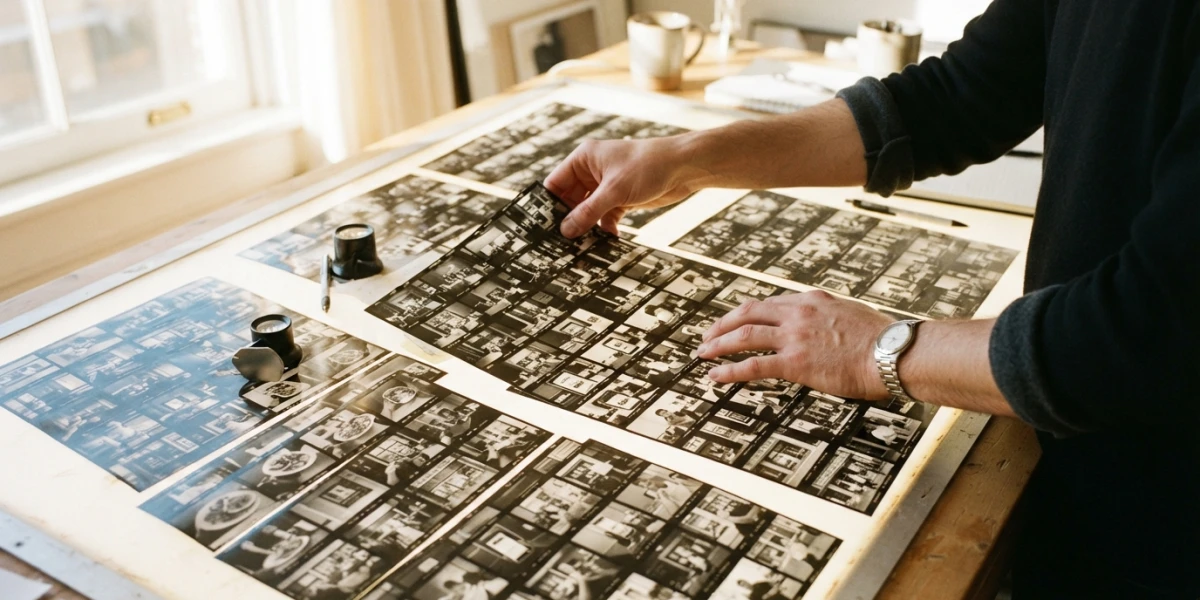
Image generated with AI
A licensed photo will never get your dish onto a delivery menu; those images have to be your own. But stock photos for restaurants can carry the rest of the brand: website, ads, social and print. Here is where they work and what each surface demands.
Where stock photos for restaurants belong (and where they do not)
Every food business runs on two kinds of image, and only one can be licensed. Getting that split wrong is not a matter of taste; it is a rejection notice.
The line every delivery platform draws
A menu item photo must show the dish your kitchen actually sends out. DoorDash counts stock imagery among its common rejection reasons. Grubhub and Deliveroo do not accept AI-generated menu images at all. The same logic covers your storefront: Google asks that profile photos represent reality, so a licensed interior standing in for your dining room is out of bounds. None of this forbids improving your own photo. Better light and a clean plate are expected; fabricating is not.
The brand surfaces where licensed images win
Everything that speaks about the brand rather than a single dish can be licensed:
- Website hero, about us, reservations, catering and private events.
- Paid ads on Meta, Google and display.
- Social posts and short vertical video.
- Email and newsletters.
- Print: menus, table tents, wrappers, bags, labels, gift cards, chalkboards.
- Seasonal promotions and hiring pages.
The rule to memorise: a licensed photo sells the brand and the atmosphere; your own photo sells the dish. Which column a piece belongs to decides the purchase.
What the numbers say about food images and orders
DoorDash reports up to 44 percent higher monthly sales for menus with photos, based on a study of more than 15,000 merchants, and says 38 percent of customers use menu photos to choose where to order. Grubhub cites up to 70 percent more orders and 65 percent more sales for restaurants following its best practices. Deliveroo reports up to 25 percent more orders on sites with menu photos, and Just Eat says items with an image enter the basket four times more often.
Read those as direction rather than promise: each platform publishes the figures about its own data and publishes no methodology, and they measure photos of your real dishes. What carries over is the conclusion behind them: food businesses are sold with images.
Sector surveys, circulating without published methodology, point the same way: about 91 percent of diners check a menu online before visiting, 65 percent let menu photos influence where they eat, and 39 percent avoid venues whose photos look poor. Around 76 percent weigh images of cleanliness and 63 percent prefer venues with an updated Google profile. Meanwhile 59 percent of restaurant web traffic is mobile and 78 percent of those sites are not well optimised for it, so your first impression is a thumbnail.
One image, five ratios: the specs for every surface
Delivery apps
- DoorDash: at least 1400 by 800 pixels, 16:9 horizontal, JPG or PNG, under 2 MB. Vertical and square crops are rejected, text, graphics and watermarks are not allowed, and because DoorDash crops to the centre for thumbnails the subject has to sit in the middle.
- Uber Eats: width 550 to 10,000 pixels and height 440 to 10,000, ratio 5:4 to 6:4 recommended, JPG, PNG or GIF, up to 10 MB. The cover image is 2880 by 2304, 5:4, JPEG.
- Grubhub and Deliveroo: public guides contradict each other, some describing square tiles and others 4:3. Settle both in the merchant dashboard.
The specs drift, so verify at the source
Guides from the same season give incompatible numbers for the same platform, including a 1200 by 800 Uber Eats minimum that Uber does not publish. Fix the final size from the merchant dashboard before buying, and pick images that survive cropping: a 16:9 frame with a centred subject still works when cut to square or 5:4, while a subject against the edge does not.
Google Business Profile and your own website
Google accepts JPG or PNG between 10 KB and 5 MB, recommends 720 by 720 pixels with a 250 by 250 minimum, and asks that the image represent reality. Read that as a split: your profile shows your real room and team, while your website can carry a licensed kitchen, service or terrace scene. Plan a hero with room for a headline and a call to action, then section images, about us, catering and reservations. Per-channel formats are covered in stock photos for websites.
Print, and the export workflow
Printed surfaces you can dress with a license include wall menus, table tents, sleeves, wrapping paper, bags, labels, chalkboards, seasonal posters and gift cards. Buy the largest download the license allows and export from there; pixels, bleed and CMYK are covered in stock photos for print. Then buy once and crop many: list your real surfaces, find one image that survives the most extreme crop, download the largest size, export per destination, and reuse it next season.
Choosing stock photos for restaurants that look like yours
Judge the image at the size a diner actually sees it: a thumbnail. Does the scene read at 100 pixels? Is there one clear subject? Is the light plausible for a venue, meaning daylight or a warm lamp rather than a blue studio? Do hygiene details hold up, and what price point does the scene imply? Service moments beat catalogue shots: hands plating, steam and texture up close, a barista mid-motion, a kitchen at peak service, a table just used, an empty clean room for reservations, fresh ingredients for about us, and a terrace for seasonal promotions.
What to avoid: stock smiles from people who are clearly not your staff; dishes built from ingredients your menu does not carry; uniforms and logos belonging to another country or brand; text baked into the image, which punishes every crop; subjects against the frame edge, which die in a square or vertical crop; and very dark lighting that reads as dirty in miniature.
Consistency comes from light, surface, palette and framing rather than from repeating one composition. Pick 15 to 25 images that share a colour temperature, then run them across every surface for the season. More in visual consistency.
Licensing, releases and the AI question
Our license is commercial, non-exclusive, worldwide, perpetual and royalty-free: web, social, advertising, video and presentations, printed material up to 500,000 copies, editing and client work, with no attribution required. Reselling the file as a standalone product is not permitted. One photo costs one credit and one video eight, with packs from 15 credits at 19 dollars to 150 at 149. For runs above 500,000 copies, or when the image itself is the product, see the extended license.
Commercial use of recognisable people needs a model release, staff and guests included, and identifiable private property needs a property release. Check what clearances an asset carries before buying, because without them it is not a campaign image; more in releases. Grubhub and Deliveroo do not permit AI-generated menu images, while our own terms acknowledge that the catalogue may include AI-assisted material. The rule is short: no library image goes on a delivery menu item, and on brand surfaces choose material whose authorship you can defend, as covered in real photos versus AI stock.
Short vertical video for Reels, Shorts and TikTok
A vertical clip costs eight credits and behaves differently on screen: choose 9:16, short and loop-friendly, with no burned-in text because your captions sit on top, the subject centred with margins top and bottom, and legible movement such as pouring, serving, kneading or fire.
A ten point checklist before you download
- Is this a brand piece rather than a stand-in for a dish or a room that must be real?
- Do you know every final size before you start searching?
- Does it survive the most extreme crop, with a centred subject and breathing room?
- Does it read at mobile thumbnail size?
- Do hygiene details and portions look credible?
- Are there recognisable people or interiors, and does the asset carry the release?
- Is it AI material headed for a destination that bans it?
- Does the licence cover printing, run size and paid commercial use?
- Have you downloaded the largest size and exported per destination?
- Have you logged the asset, date and use so next season costs nothing?
Conclusion
An image in a restaurant does not decorate; it sells an expectation. The images you can license sell the brand and the atmosphere, and the ones you cannot license have to come from your own kitchen. Buy once, export per surface, and build a set that carries the venue's identity across the website, the ads and the printed menu. Explore the collection of photos and videos with clear commercial licensing, priced per download and without a mandatory subscription.
Related articles
Looking for the perfect stock photo?
Browse thousands of premium photos and 4K videos, pay per download.
Browse the collection