Aug 1, 2026
Real Photos vs AI Images: What Stock Buyers Actually License in 2026
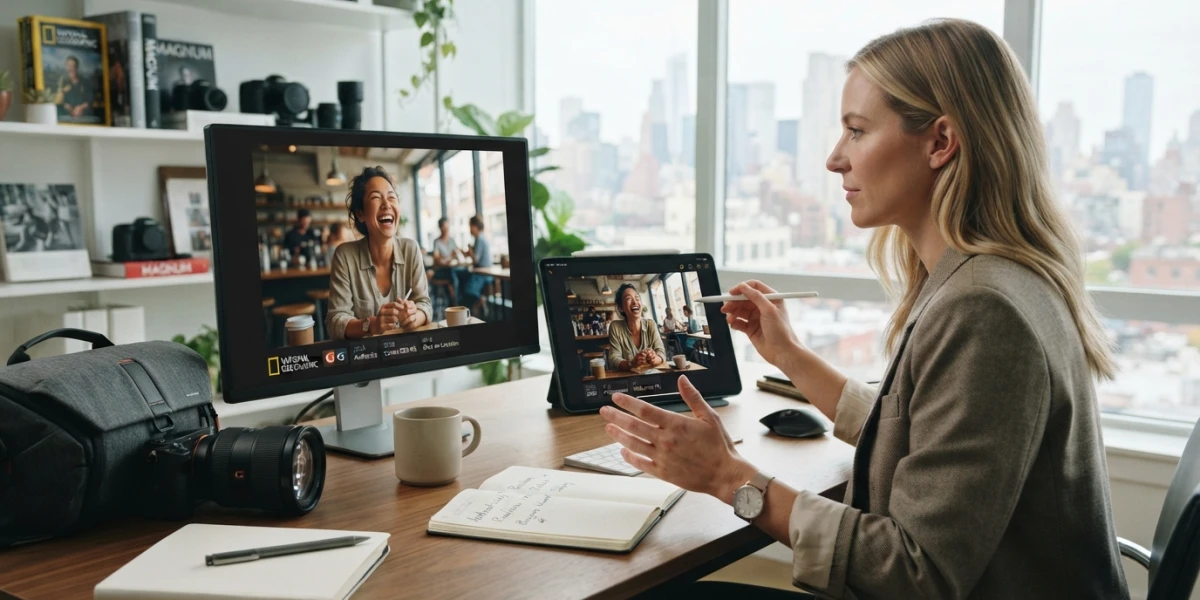
Image generated with AI
By mid-2026, the debate between real photos vs AI images stopped being a technical question and became a licensing one: generators now produce frames that fool professionals in blind tests, yet stock buyers still pay a premium for real photography in branding and editorial. This article explains why authenticity still commands higher rates, what agencies actually allow, and how to decide which type belongs in your next campaign.
How AI Took Over the Catalog
The stock industry absorbed generative imagery faster than almost any other market. Adobe Stock began accepting generative content in December 2022, requiring contributors to label it clearly, and the rest of the major agencies followed with similar policies. The result was a flood of volume: generic scenes, corporate backdrops and abstract textures became cheap and effectively infinite, which pushed prices down across the commodity end of the market.
That pressure did not flatten the whole industry, though. It split it. AI now dominates the low-price, high-volume segment where a buyer just needs a serviceable visual quickly. Traditional photography holds the premium positioning in the spaces where authenticity and legal clarity matter most, and those spaces are exactly where brands spend the most money.
The Rules Agencies Enforce
Before you license anything, it helps to know what the platforms themselves require. Adobe Stock asks contributors to mark generative work as AI-generated, submit it as an illustration rather than a photograph, and apply the same technical and legal standards as traditional uploads: no embedded text, no watermarks, and model or property releases where applicable. Getty, on the editorial side, keeps a deliberately restrictive stance on generative imagery to protect journalistic integrity.
For buyers this matters because the label travels with the file. A licensed image comes with a documented origin, and in regulated sectors that documentation is worth as much as the pixels.
What Buyers Demand: Storytelling, Trust, Legal Clarity
Research with actual stock buyers keeps arriving at the same conclusion: authentic, well-composed scenes remain invaluable for branding and editorial work. The purchasing drivers are not resolution or technical perfection but storytelling, trust and a distinctive visual identity. A campaign image has to say something about the company behind it, and that is hard to fake convincingly at scale.
Industries with legal or reputational exposure — healthcare, finance, B2B services and editorial publications — consistently prefer real photography. When a claim rests on a visual, the ability to point to a photographed reality is a form of liability protection. Buyers in those sectors treat the AI label as a reason to keep looking.
Why Blind Tests No Longer Settle It
Only a couple of years ago, telling the difference was trivial: AI images broke on hands, text and reflections. That diagnostic stopped working around 2025. By mid-2026, leading models such as Midjourney v7, DALL-E 4, Flux Pro and Stable Diffusion 4 routinely pass casual inspection, and even trained eyes struggle without zooming into details.
That shift has consequences for the real vs AI decision. Visual inspection is no longer a reliable guarantee, so the label and the license become the guarantee. What you are really choosing is not whether the image looks real, but whether you can stand behind its provenance when a client, a regulator or a reader asks.
When to License AI vs Real Photography
Both formats have a legitimate place, and the most efficient teams use each where it earns its keep.
License AI images for internal mockups, A/B test variants, ephemeral concepts like social posts with a short shelf life, and any project where the budget is the binding constraint. The cost advantage is real and the risk is low when the image never represents the brand publicly for long.
License real photography for brand campaigns, editorial features, regulated industries and every placement where trust directly converts into revenue. A hero image on a pricing page, a byline portrait or an annual report photo is an investment in credibility, and cutting that corner is the most expensive saving a marketing team can make.
A useful rule of thumb: if the image will still be on the page in six months, it should probably be real photography; if it exists to test a hypothesis or fill a two-day campaign slot, AI is a defensible choice. The shelf life of the placement is a better guide than the size of the budget, because the cost of a credibility failure compounds exactly as long as the image stays visible.
What This Means for Photographers
For contributors, the AI wave is not the end of the market; it is the end of the generic part of it. The photographers still earning premium rates are selling series with a clear narrative, complete model and property releases, and a documented shooting process. Consistency and art direction now separate licensable work from the undifferentiated mass, and buyers explicitly pay for that difference.
Practical advice for sellers: build collections around a coherent theme and a consistent light signature, shoot scenes that AI cannot easily replicate from memory — real locations, real interactions, specific cultural details — and treat your releases as part of the product. The license is the moat.
Conclusion
The real photos vs AI question in 2026 is not about which one looks better; it is about what you are promising when you press publish. AI wins on speed and price for disposable visuals, while real photography keeps the segments where trust, storytelling and legal clarity are monetized. Choose by the stakes of the placement, not by the novelty of the tool, and your imagery will keep working long after the trend cycle moves on.
When your campaign needs photography you can stand behind, explore the YourPhotoStock collection — real, licensable photos shot with intent.
Related articles


Looking for the perfect stock photo?
Browse thousands of premium photos and 4K videos, pay per download.
Browse the collection