Oct 7, 2026
Stock Photos for Financial Services: How to Buy Imagery That Builds Trust, Not Suspicion

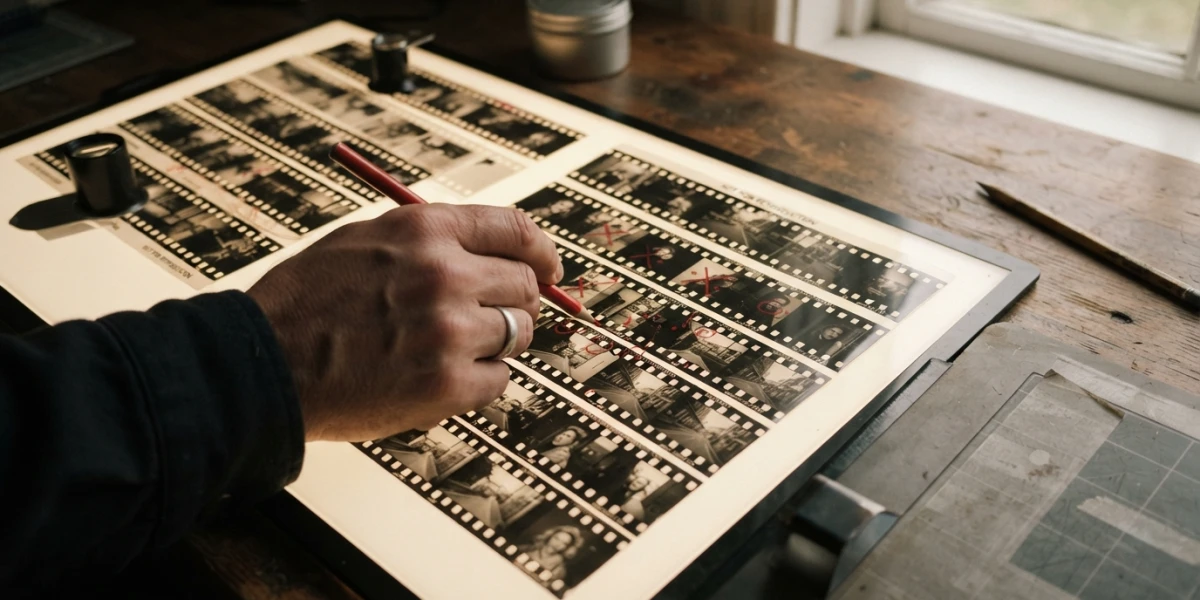
Image generated with AI
Choosing stock photos for financial services is not like buying imagery for any other sector. Here a photograph can read as a promise: a smiling face beside a performance chart, a testimonial block or a "trusted by" row stops being decoration and starts making a claim.
Stock Photos for Financial Services: Why a Bad Image Is a Business Risk
The first judgment is almost instant. Research by Gitte Lindgaard and colleagues in 2006 found that people form a visual appeal judgment about a page in roughly 50 milliseconds, and the Stanford Web Credibility Project reported that around 46.1% of users judge credibility partly on visual design. That weighs more in finance than anywhere else, because the visitor is deciding whether to hand over money.
The second reason: here an image is an assertion. A person smiling next to a performance figure can be read as a promise of results or as a real client's endorsement. The third: the sector's visual inventory is worn out and auditable. A 2026 visual analysis of Fortune 500 corporate imagery in Frontiers in Communication found close to 20% of the images were stock photography and about 3% exact duplicates of the same file across companies. The generic image of trust is already on your competitor's site.
So buying here means choosing an image that asserts nothing you cannot defend in front of a regulator, and whose license covers the channel where it will run.
The Cliche Audit: The Five Images Every Buyer Already Owns
The burned inventory: two suits shaking hands, executives around a table staring at a tablet, piles of coins with an upward arrow, fake rising charts, the piggy bank and the retired couple on a beach. On that last one, an analysis of advisor websites published by Paladin Digital Marketing in September 2025 argues the image went from go-to resource to liability.
The duplicate test is blunt: if your hero could sit on another bank's homepage unnoticed, it is building noise, not brand. Our guide to stock photos that do not look like stock covers the visual tells.
Search the moment, not the object. Instead of "bank" or "business meeting", search behavior: a couple planning a budget at the kitchen table, first apartment paperwork, an owner counting cash, a debt letter being opened.
Three tests before download: could this photo sit on a competitor's site unnoticed? Does it show a scene my customer recognizes, or a brochure fantasy? Does it survive a crop to 4:5 with text over it? A cliche fails the third.
Buy for Your Actual Client, Not the Brochure
Take the Frontiers finding with Paladin's note on underserved audiences and the rule becomes representation proportional to your real base. If your clients are family businesses, your set cannot be all glass offices and thirty-somethings in suits. Vary age, financial stage and client type: include 55+ when you sell retirement cover, first accounts, multigenerational families, women investors and self-employed workers. See choosing diverse stock photography.
Because regulators require balanced advertising, a catalog of yachts and closed deals promises wealth no institution can back up. Show money in its everyday function: paying, saving, signing, reviewing. And be careful with banknotes, the most used cliche in the category and often subject to reproduction rules; prefer card, terminal and documents.
The Compliance Layer: What a Regulator or an Ad Platform Will Not Accept
Read this as usage risk, not legal advice; verify each norm with your compliance team.
Since its compliance date in November 2022, the SEC's Marketing Rule, Rule 206(4)-1, allows testimonials in adviser advertising but requires disclosures on whether the speaker is a current client and whether they were paid. A stock photo of a smiling person next to a quote reads as a real client endorsing the adviser, so if the piece contains a quote, the person shown should be the person speaking.
Under FINRA Rule 2210, broker-dealer communications must be fair and balanced, presenting risks alongside benefits and approved by a qualified principal. The case reported by Global Relay is a warning: in March 2024 FINRA fined M1 Finance $850,000 over influencer posts that were not balanced. Applied to imagery, an upward-only curve is not a photo, it is a claim somebody has to approve.
On Meta, ads for financial products can fall into a special ad category covering credit, employment and housing, which restricts targeting and risks rejections when undeclared, as Meta's Marketing API documentation requires. For paid placements, avoid images implying eligibility, such as a gold card in close-up.
Never put the disclosure inside the image: burned-in text cannot be updated when rules change, is not read on small screens and cannot be audited. Disclosures belong in HTML beside the image, so buy assets with the negative space to hold them, as covered in negative space in stock photos. AI is not the fix either: for people and products, buy an image with a release and clear authorship, as we explain in real photos versus AI stock photography.
Licensing: What You Need Before a Face or a Logo Appears
A bank website, an app ad and an insurer's brochure are commercial use; editorial imagery is out of scope, as explained in commercial versus editorial stock licenses. For any face in promotional material you need a signed model release, so confirm it is included, as detailed in model and property releases.
Sensitive use is the limit that catches finance. Libraries restrict uses a reasonable person could find undignified: Adobe's terms list tobacco advertising, adult entertainment, implied political endorsement and suggesting a disability, and Shutterstock sells a specific sensitive-use license. If you use a real person's photo around debt, fraud or loss of money, the standard license may not reach far enough. See when you need an extended license.
A bank logo, card brand or identifiable building in a commercial photo requires permission, so check files at 100% for screens with logos and embroidered uniforms.
Verified on our site on 07 October 2026: our Commercial License is non-exclusive, worldwide, perpetual and royalty-free, covering web, social, ads, video and presentations, work for clients, printing up to 500,000 copies and no attribution. It does not allow reselling the original file or using assets in logos or trademarks.
Sizes and Formats: One Purchase, Six Placements
Buy by native framing, not by cropping. A web hero needs 2000 pixels wide for retina with room for headline and disclaimer, per hero images that convert. Social feed runs at 1080 by 1350 (4:5), per stock photos for social media ads. Stories and Reels run at 1080 by 1920 (9:16), which is why you buy vertical stock photos rather than cropping. Email sits around 600 pixels, and print needs 300 ppi, per stock photo file formats.
Accessibility matters too: financial sites need descriptive alt text, so pick photos you can describe in one sentence.
The Seven-Image Kit That Covers a Whole Financial Brand
A set you can license once and reuse all year: the brand hero with room for the headline; real advice, two people in conversation with documents on the table; the client's decision moment; everyday money, paying by phone; life stage, an active 55+ and a young family; detail shots of hands and documents; and a small business owner in their own premises. Seven rather than thirty: every image has to survive six placements without repeating a cliche (see visual consistency across campaigns).
Budget: Credits Versus a Corporate Shoot
Prices verified on 07 October 2026: 15 credits for $19, about $1.27 per image; 50 credits for $49; 150 credits for $149; and a single download for $9, no subscription, commercial license included. Credits expire one year after purchase, per our pricing page.
A corporate shoot means photographer and model fees, location, direction, releases and permits. Shoot your branch, your advisers and your clients with releases; buy the generic layer. Keep a license register with source, date, license type and channel, so you never re-buy and always have proof of your right to use an image.
The Pre-Purchase Checklist Before You Buy
Does the image say something your competitor's site does not, or is it the coins-and-handshake cliche? Did you search the moment, not the object? Does it represent your real client? Does it survive a 4:5 crop with text over it? Do you have a vertical version if the piece lives in Stories? Is this commercial use? Does it come with a release and without logos? Is the disclosure in HTML and not inside the image? And did you log the license before publishing?
Conclusion
In a sector where trust is settled in about 50 milliseconds and advertising is audited afterwards, the best finance image is not the successful client. It is a moment your customer recognizes as their own, with no promises hidden in the frame. Browse the licensed collection with clear commercial terms and no subscription, and buy the moment, not the cliche.
Related articles


Looking for the perfect stock photo?
Browse thousands of premium photos and 4K videos, pay per download.
Browse the collection