Aug 9, 2026
Night Photography for Stock: Low-Light Photos That License
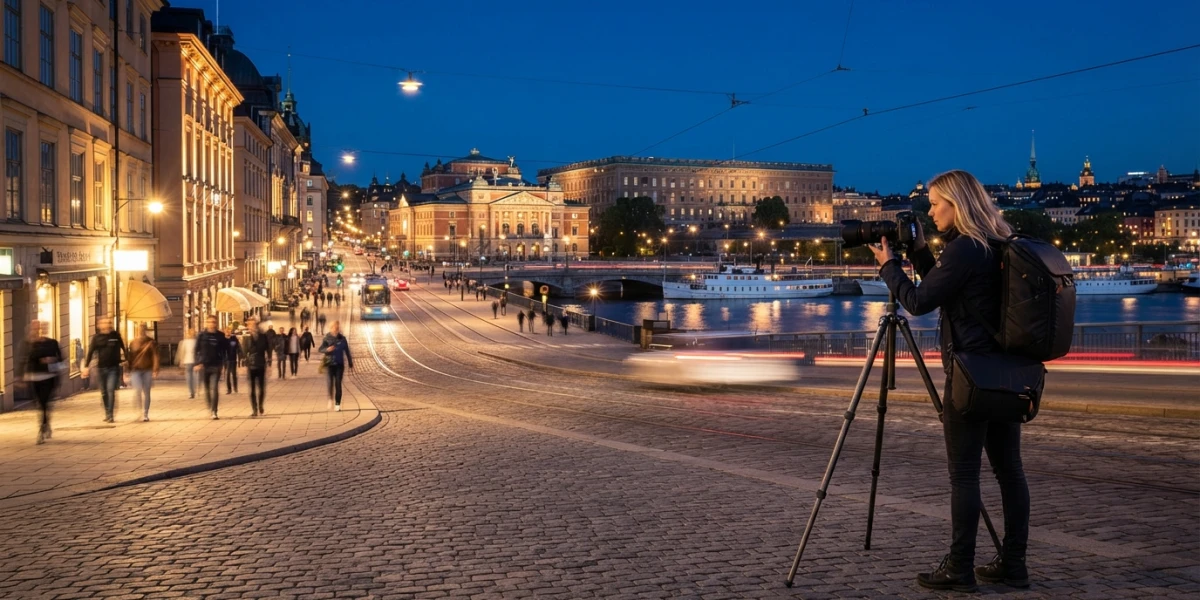
Image generated with AI
Night shots face a fraction of the competition of daylight images, and buyers still need them for travel, hospitality, and events. The catch: low light punishes technical mistakes. Master three settings and a noise check, and your night photography can license for years.
Why Night Images Stand Out in Stock
Daylight is the default for most stock contributors. Shoot a sunrise skyline and you join thousands of near-identical frames uploaded the same week. At night, the playing field narrows: fewer photographers are willing to carry a tripod, wait for the right darkness, and troubleshoot exposures in the cold. That scarcity is exactly why night photography for stock remains a dependable niche with steady, evergreen demand.
Buyers license night imagery across industries that never pause. Travel brands need city skylines lit up after dark. Hospitality projects look for neon signs, bar interiors, and evening streets. Event marketers want concert lights, festival crowds, and illuminated venues. The same scene that reads as documentary at noon turns cinematic under neon, which gives night images a higher perceived production value than their daylight equivalents.
The Gear That Makes Night Work
You do not need an expensive camera to shoot low light, but you do need a few pieces of gear that most daytime shooters skip. A firm tripod is non-negotiable: camera shake is the number one cause of ruined night frames, and no amount of editing brings back detail smeared across several pixels. Lenses with wide apertures, f/2.8 or faster, let in two to four times more light than kit zooms, which matters far more than sensor megapixels.
A remote shutter release removes the vibration of pressing the button, and the two-second self-timer works as a free alternative. Carry spare batteries, because long exposures and cold air drain them quickly, and bring a headlamp with a red-light mode so you can adjust settings without destroying your night vision between shots. That checklist, repeated by every serious night photographer, is cheap insurance against a wasted evening.
Exposure Strategy: Aperture, ISO, Shutter
Low light forces you to rethink the exposure triangle. Open the aperture as wide as your lens allows, typically f/1.4 to f/2.8, to maximize the light reaching the sensor. Set the ISO higher than you normally would: modern full-frame cameras stay remarkably clean up to ISO 12800, and even crop sensors produce usable files at ISO 3200 with careful processing. Then choose the slowest shutter speed you can hold safely, either with a tripod or with the image stabilization built into the camera body.
AI denoise tools changed the low-light game. Software such as Lightroom AI Denoise and Topaz manages to recover two to three stops of usable ISO on virtually any camera, which means a frame shot at ISO 25600 that would have been unusable a few years ago can now pass review for editorial use. The trick is restraint: denoise only as much as the image needs, because an over-smoothed, plastic-looking sky is an instant rejection.
Long Exposures and Light Trails
The creative payoff of night work is the long exposure. Car light trails, star streaks, and moving carnival rides become smooth ribbons of color when the shutter stays open for several seconds. Set the camera on the tripod, trigger it remotely, and let the exposure run. Check the result at 100 percent zoom before moving on: noise in the shadows is the classic reviewer killer, and it is far easier to fix in the field with a longer exposure or a slightly higher ISO than to rescue afterward.
The Night Stock Quality Checklist
Before uploading, run every night frame through the same quality check agencies apply. Confirm the subject is tack sharp, especially the element the buyer will look at first. Review noise at 100 percent zoom and apply denoise only where needed. Check the white balance: street lamps tint shadows orange or green, and a neutral frame is safer than an artistic cast that limits the image to a single mood. Make sure blacks are not crushed into solid voids and highlights are not clipped, particularly on neon signs and streetlights, because blown highlights cannot be recovered in post.
From Night to Upload in Six Steps
If you are shooting a night portfolio for the first time, follow this sequence on your next outing:
- Mount the camera on a firm tripod and use a remote release or the self-timer.
- Open the aperture as wide as the lens allows, ideally f/2.8 or faster.
- Raise the ISO and rely on AI denoise in post instead of underexposing.
- Use a long exposure for lights in motion, like car trails and neon reflections.
- Set white balance manually or correct the orange-green cast of street lamps.
- Review every frame at 100 percent zoom for noise and sharpness before uploading.
What Buyers Check in Night Imagery
Buyers approach night images with a specific set of worries. They zoom into shadows looking for noise, scan highlights for clipping on signage and lamps, and check whether the file has enough resolution for hero placements on websites and campaigns. A noisy skyline fails the test instantly, no matter how beautiful the composition.
That is why curated collections matter in this genre. When a marketplace reviews every submission for technical quality, a night image that makes it through carries an implicit guarantee: the noise is controlled, the highlights hold detail, and the file is sharp at full resolution. At YourPhotoStock, every published photograph has already passed that technical review, so buyers can search the night category knowing the basics are handled and focus on finding the right mood for their project.
Conclusion
Night photography for stock is a smaller pond with steady demand and less competition than daytime genres. Carry the tripod, open the aperture, trust modern ISO and AI denoise, and run the noise check before you upload. If you are on the buying side, explore the YourPhotoStock collection to find clean, sharp night imagery for travel, hospitality, and event projects, ready to license without the guesswork.
Related articles
Looking for the perfect stock photo?
Browse thousands of premium photos and 4K videos, pay per download.
Browse the collection