Aug 3, 2026
Hard Light Portrait Photography: How to Make Harsh Sunlight Work for You
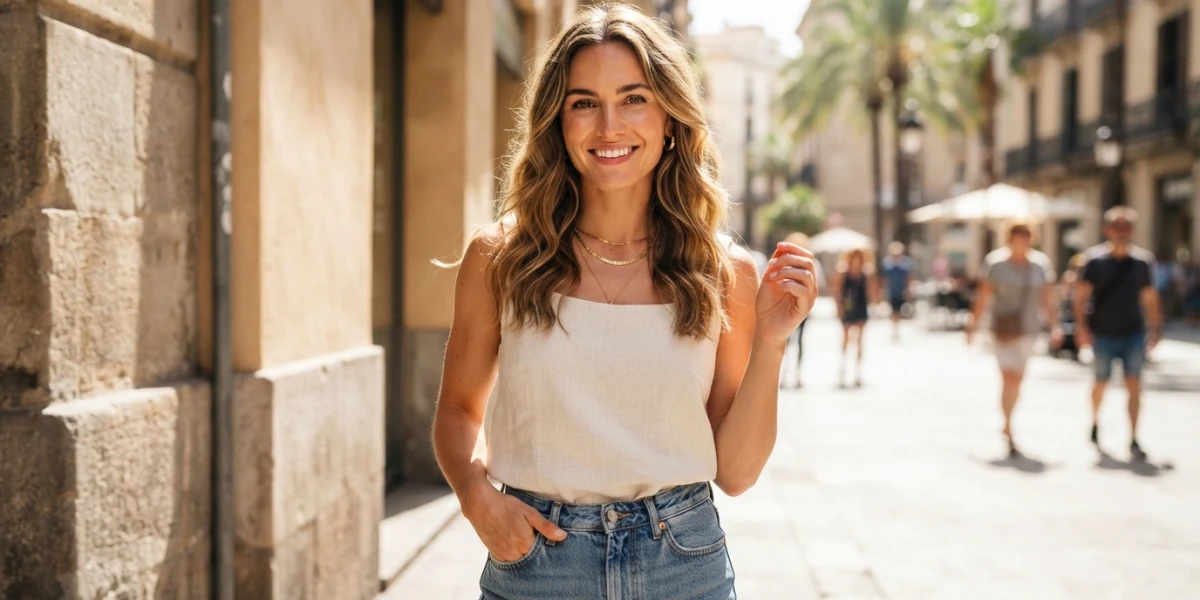
Image generated with AI
Hard light is the first thing every portrait photographer learns to avoid: diffusers, umbrellas, cloudy days, anything to soften the source. Yet some of the most striking portraits ever made come from embracing it. With control over your subject, hard light portrait photography delivers drama, sculpting, and visual impact that soft light simply cannot match. Here is how to use it — from midday sun to bare flash.
Why Hard Light Gets a Bad Reputation
The dominant instinct is to seek flattering, gentle light — to diffuse, to bounce, to wait for clouds. Photographer Roberto Valenzuela argues that hard light is not actually difficult once you control the subject, and that the payoff is visibly more dynamic: more drama, better definition of the face, and a stronger visual punch. The problem was never the light itself.
As photographer Tyrie Mehaffey puts it, bad light does not exist — only misused light does. Midday sun is not an obstacle to work around; it is a tool with its own character, and learning to direct it is a skill like any other in the craft.
Technique 1: Turn the Sun Into a Backlight
The quickest way to make harsh sun work in your favor is to stop fighting it head-on. Position your subject facing their own shadow, with the sun behind them. The sun tracing around the hair creates the halo that photographers usually chase at golden hour — except you can produce it at noon.
Then rotate the subject slowly until you find the sweet spot: a backlit portrait with soft, even light on the face. Watch the shadows and highlights on the skin as you turn, and settle where the face reads clearly while the rim of light separates the subject from the background. What looked like impossible light becomes a controlled setup in under a minute.
Technique 2: Use Shade and Sun Spots
Dappled light — the sun breaking through trees — is another gift of harsh conditions. Place the subject in a patch of sunlight rather than in the shade, keeping the sun behind them as in the backlight setup. The lit leaves and branches blur into a warmer, darker backdrop than a flat blue sky, adding depth and atmosphere to the frame.
The key is to treat the shade as the background and the sun spot as your key light. Let the bright areas of the foliage glow behind the subject while the face stays in the gentle, indirect light of the surrounding shade.
Technique 3: Meter for the Face
In hard light, the background will always be brighter than your subject, and exposing for the whole scene leaves the face dark. Switch to spot metering and meter on the skin — expose for the face and let the background fall where it falls. Shooting in RAW gives you the headroom to recover detail in the brightest skies afterward, so the highlights stay controllable in post instead of dictating the exposure.
This is where the harsh-light portrait separates from a snapshot: the subject is correctly exposed, the background is intentionally bright, and the contrast between them is the point of the image.
The Batman and Robin Setup
Valenzuela's favorite approach for controlled hard light in the studio is a two-light configuration he calls Batman and Robin. The hard light — Batman — acts as the main light across the face, delivering the drama and the defined shadow edge. A second, softer light — Robin — fills the shadows just enough to open them up. The result is the impact of hard light without losing detail in the dark side of the face.
One equipment rule from the same school of thought: never buy a hard modifier without its grid. Without a grid, the light spills onto the background, and the separation between subject and environment disappears — Valenzuela compares it to buying a car with no steering wheel. The grid keeps the beam where you aim it, and the separation is what makes the portrait read as intentional.
Finishing Touches in Post
Back in the edit, a subtle vignette brings attention back to the subject and gives depth to the bright areas of the background. Keep it gentle — the goal is to frame the face, not to announce the effect.
Most importantly, treat the light as part of the story. Direct sun communicates an exuberant, luminous mood; it reads as energy, not as a mistake. When you stop apologizing for the light and start directing it, the images gain a confidence that soft-light work often lacks.
Hard Light in the Stock Market
The stock market is saturated with soft-light lifestyle portraits. The dramatic look — hard shadows, contrast, directional light — is comparatively rare, and that scarcity is exactly what editorial and fashion buyers are searching for. A portfolio with a strong hard-light series stands out in search results dominated by the same diffuse aesthetic.
Make sure the keywords reflect the look, not just the subject: "dramatic portrait," "hard shadow," "contrast lighting," "harsh sunlight," and "rim light" alongside the usual subject terms. And consider shooting the same portrait in both hard and soft light — the two versions cover different buyer needs and double the reach of a single session.
Conclusion
Hard light portrait photography is not a problem to survive until the clouds roll in — it is a creative choice with a commercial edge. Backlight halos at noon, dappled shade as a backdrop, spot metering on the face, and a Batman and Robin fill setup turn harsh sun into drama. The look is under-represented in stock, which makes it a genuine differentiator for sellers and a bold choice for buyers. If you are planning a campaign with personality, browse the YourPhotoStock collection for portraits with real character — including the dramatic light you will not find everywhere else.
Related articles


Looking for the perfect stock photo?
Browse thousands of premium photos and 4K videos, pay per download.
Browse the collection