Aug 2, 2026
Golden Hour Photography: Timing, Settings, and the Window Light Trick
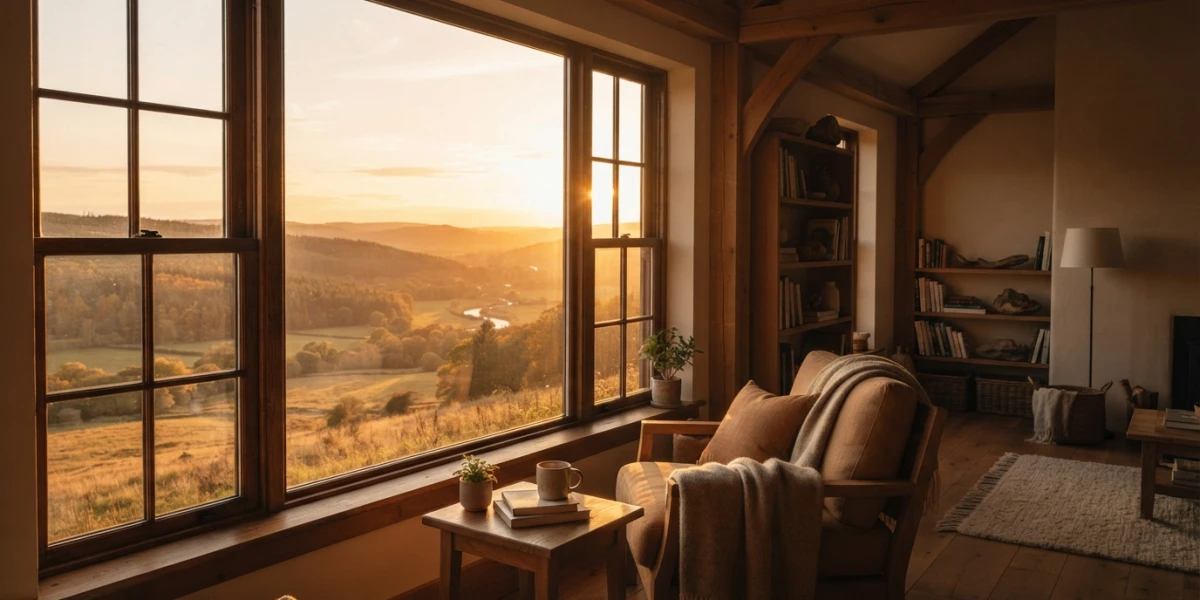
Image generated with AI
Golden hour photography is a timing skill, not a gear budget. Twenty minutes of low sun are worth more than a studio kit, and the same logic applies indoors: a single window can reproduce that warm, soft light anywhere. This guide covers when the light turns golden, which settings to dial in, and the window trick that gives you the look all day.
What Golden Hour Actually Is
Golden hour is the period around sunrise and sunset when the sun sits low over the horizon. Technically, it stretches from the moment the sun touches the horizon through civil twilight, the window when the sun is between zero and six degrees below it and there is still enough natural light to shoot without artificial help.
Why does the light change so dramatically? Low sun means the light travels through much more atmosphere before it reaches you. The atmosphere scatters the shorter, blue wavelengths and lets the longer, warm ones through — that is why the light turns orange and honey-colored. The same path diffuses the sun itself, so shadows grow long and soft, and the contrast range shrinks to something a camera can actually handle. In the middle of the day, harsh sun blows out highlights and buries shadows; at golden hour, both fit in a single frame.
Timing It Right
The exact moment depends on your coordinates, the season, and the date. Apps like PhotoPills compute sunrise, sunset, and the civil twilight window for your location, down to the minute. Two practical notes: golden hour lasts longer at higher latitudes and in winter, when the sun travels a shallower arc, and it is not the same thing as blue hour, which comes after sunset when the sky turns deep blue. Learn to tell them apart and you will always know which light you are chasing.
Because the window is short, planning beats improvisation. Scout the location the day before and picture where the sun will sit, then arrive at least thirty minutes early. The best light is not a single moment — it is a gradient that starts gentle, peaks, and fades, and the frames you shoot at the start and the end of the window often surprise you the most. If you only have one chance, treat the first ten minutes as a warm-up for your settings, not as throwaway shots.
Golden Hour Settings That Work
Because the light is already soft and directional, the camera work is simple. For portraits, shoot wide open — f/1.8 to f/2.8 — so the warm background melts into a soft, glowing blur. Meter on the subject's skin and add a touch of positive compensation, around +0.3 to +0.7 EV, because backlit subjects fool the meter into underexposing the face. Decide what to do with flare deliberately: a little lens flare adds atmosphere, a lot of it kills contrast, and stock reviewers flag heavy flare as a technical fault.
Two settings deserve extra attention. Set white balance to Daylight instead of Auto: automatic white balance tries to neutralize the warm cast, which is exactly the color you are there to capture — daylight WB keeps the honey tones honest. And in the low light of early morning or late evening, autofocus can hunt; switch to a single focus point on the subject's eye and drop to a slower shutter speed with a steady stance or a light tripod. Finally, shoot RAW. The light changes minute by minute, and RAW gives you the headroom to recover a blown highlight or lift a shadow that the JPEG would have thrown away.
Window Light: The Indoor Golden Hour
Inside, the same principles apply with a much simpler tool: a window. A large window that does not receive direct sun is a soft, directional light source — the indoor equivalent of golden hour, available all day. The classic is a north-facing window, the one the Dutch masters built their studios around. Because the sun never shines straight through it, the light stays stable and soft from morning to evening, and its quality barely changes while you work.
Shaping Window Light
The window gives you the light; you give it the direction. Rotate your subject relative to the window and you choose the modeling: side light carves the face, a three-quarter turn creates the Rembrandt triangle of light on the cheek, and turning the subject's back to the window produces a clean silhouette. A white foam board on the shadow side acts as a reflector and lifts the fill without any extra gear. A sheer curtain turns the whole window into a giant diffuser for the softest possible light, and moving the subject closer to or farther from the window lets you trade softness for contrast. You can run an entire session with nothing but a window, a reflector, and a subject.
Why Buyers Search for Natural Light
There is a commercial reason this light sells. Warm natural light dominates lifestyle briefs because it reads as authentic: it looks like real life, not a studio set. Designers building campaigns around family, food, home, and wellness consistently search for "golden hour" and "window light" imagery, and those photos perform across lifestyle, food, and portrait categories. For sellers, that is the rare case where the technically easy shot is also the commercially valuable one.
That preference is exactly what the YourPhotoStock collection is built on: real photography in natural light, edited naturally, and licensed commercially. Browse the catalog and you will see the same warm, honest light across the lifestyle and portrait galleries — the light this article taught you to find on your own.
Conclusion
Golden hour photography comes down to two lights and one habit: know when the sun is low, and know which window in your house faces north. No expensive modifiers, no studio booking — just timing and direction. Master those and every day gives you a shootable golden hour, indoors and out. Explore the YourPhotoStock collection to see natural light at its commercial best.
Related articles


Looking for the perfect stock photo?
Browse thousands of premium photos and 4K videos, pay per download.
Browse the collection