Aug 4, 2026
Food Photography Lighting: How Side Light Makes Texture Pop
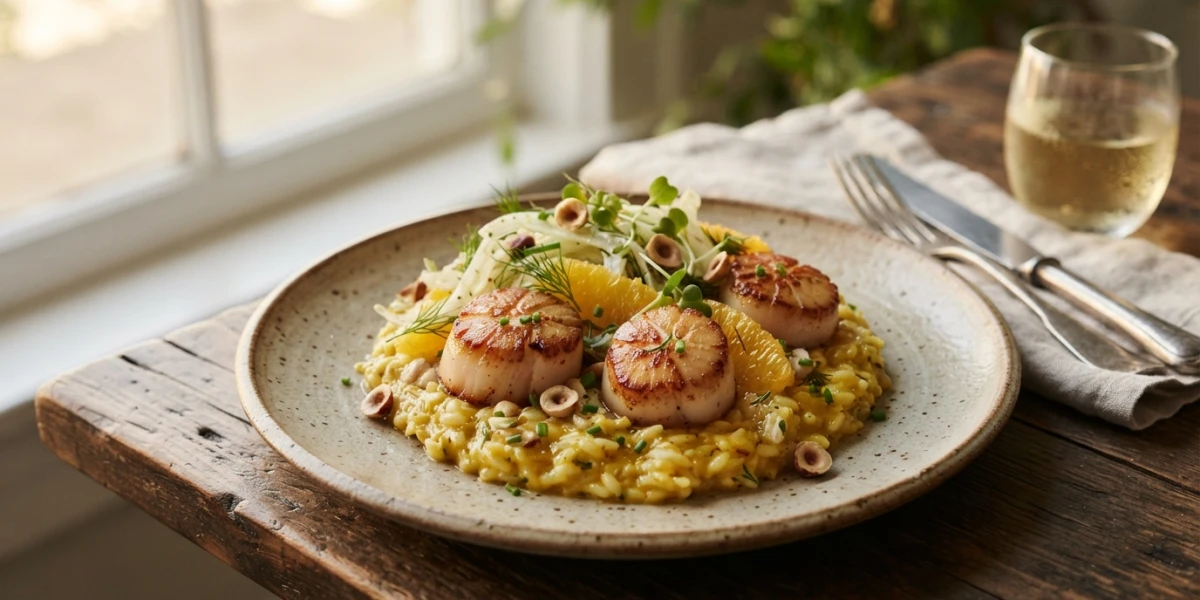
Image generated with AI
A food photo isn't judged by the plate but by how the light moves across it. Side light reveals the crust of bread, the steam of a stew, and the gloss of a sauce — and one window is enough to master food photography lighting at home.
Why Side Light Beats Flat Light for Food
Flat, frontal light is the enemy of appetite. When the light hits the dish straight on, shadows disappear, texture flattens, and a crusty loaf of bread can look like a beige blob. Directional light — coming from the side or slightly behind — skims across the surface of the food, and those soft shadows are what your eye reads as relief, grain, and moisture. The same physics applies to every dish: the little valleys and peaks on a burger bun, the bubbles in a carbonated drink, the ridges on a grilled steak only become visible when the light travels across them instead of straight into the camera. That is why editorial food photography almost always uses side or back light: it builds depth without any props.
Setting Up a Window-Light Setup at Home
Your window is a softbox that came with the house. Find a window with indirect light — north-facing is ideal in the northern hemisphere — and, if the sun hits it directly, soften it with a white curtain or a sheet of baking paper taped over the glass. Place your setup at a 45-degree angle to the window, with the dish close to the glass. On the opposite side of the plate, lean a piece of white cardboard: that reflector fills the shadows just enough to keep the food's true color while preserving the texture-revealing contrast. Skip the flash entirely; direct flash from the camera kills exactly the shadows you are trying to create.
Direction: Side, Back, or 45 Degrees
Side light at roughly 45 degrees is the sweet spot for most dishes: it models the food's form and keeps the front of the plate readable. True backlight is the move for translucent and steaming subjects — a glass of iced tea, a rising cloud of vapor, a slice of citrus — because light passing through them makes them glow. When in doubt, start at 45 degrees, look at the shadows, and rotate the plate until the texture you want to sell is the one catching the light.
Diffusion: From Harsh Sun to Soft Window
Diffusion is a creative dial, not a rule. Direct sun throws hard shadows and a bright, summery mood — perfect for fresh salads and bright drinks where you want the sunlight itself in the story. Overcast days and curtain-softened light produce the gentle gradients that creamy dishes, soups, and desserts photograph best in. If the light is too harsh, move the setup a step back from the window; if it is too flat, remove the curtain. You are looking for shadows that are visible but not black.
Camera Settings and Angles That Sell Food
Keep the camera at a medium aperture — roughly f/2.8 to f/5.6 — so the whole dish stays sharp while the background softens into a suggestion. Set a low ISO, shoot in RAW so you can fix white balance without losing color, and use a tripod if your window light is dim, because nothing ruins a food shot like camera shake. Angles matter as much as settings: the 45-degree angle is the editorial standard that shows both the top and the side of the food; the 90-degree overhead view (flat lay) is what menus and delivery apps use; and table-level shooting makes stacks of pancakes or burgers look monumental. Shoot the same dish from all three and let the buyer's use case decide.
Styling for Texture: Steam, Crust, Gloss
Texture is the product in food photography, and styling is how you sell it. Steam reads best in the first minute after serving, so have the camera ready before the dish arrives. Crust and crumb benefit from a few raw ingredients scattered nearby — a stray peppercorn, a sprig of herb, flour dusted on the board. A thin brush of oil on a sauce or a pastry brings out the gloss that side light loves to catch. Shoot on wood, stone, or matte ceramic rather than glossy white, which competes with the food, and build height with stacked plates or a linen napkin so the light has more surface to travel across.
What Buyers Look For in Stock Food Photos
Food is one of the most licensed categories in stock photography: menus, delivery apps, recipe blogs, packaging, and editorial all need appetizing imagery, and they need it in coherent sets. When a designer opens your series, the first things they discard are muted color, flat light, and plates floating without context. What they buy is appetite plus usability: a dish that looks edible at thumbnail size, shot from an angle that fits their layout, with room for text if they need it. As a seller, that means delivering series — the same dish from 45 degrees, overhead, and table level, in one session — because buyers building a menu or a blog post would rather license six consistent frames from one photographer than mix six different styles. Tag honestly and specifically: "steam," "texture," "overhead," "rustic," "comfort food" outperform vague keywords because they match how art directors actually search.
Common Mistakes
The most common mistake is hard overhead light, which flattens texture and turns shadows into black holes under the plate. The second is overexposure: blown highlights on a white plate read as "washed out" even when the food is perfect. Third, a busy background — a cluttered counter, a bright label, a colorful wall — competes with the dish for the viewer's eye; the background should be a quiet surface, not a second subject. And fourth, forgetting white balance: a soup shot under warm household bulbs comes out orange, and once the color of the food is wrong, no styling can save it. Set white balance against a neutral card or fix it in RAW before you deliver.
Conclusion
Side light, a window, a white reflector, and a 45-degree angle: that is the entire setup behind appetizing food photography. Soften the light, place the plate where the shadows tell the story, and shoot at f/2.8 to f/5.6 from the angles your buyers actually use. When you are ready to see the standard in practice — or to license images for your next menu, blog post, or campaign — browse the YourPhotoStock food collection, where every dish was shot with the texture and the light that make people hungry.
Related articles

Looking for the perfect stock photo?
Browse thousands of premium photos and 4K videos, pay per download.
Browse the collection